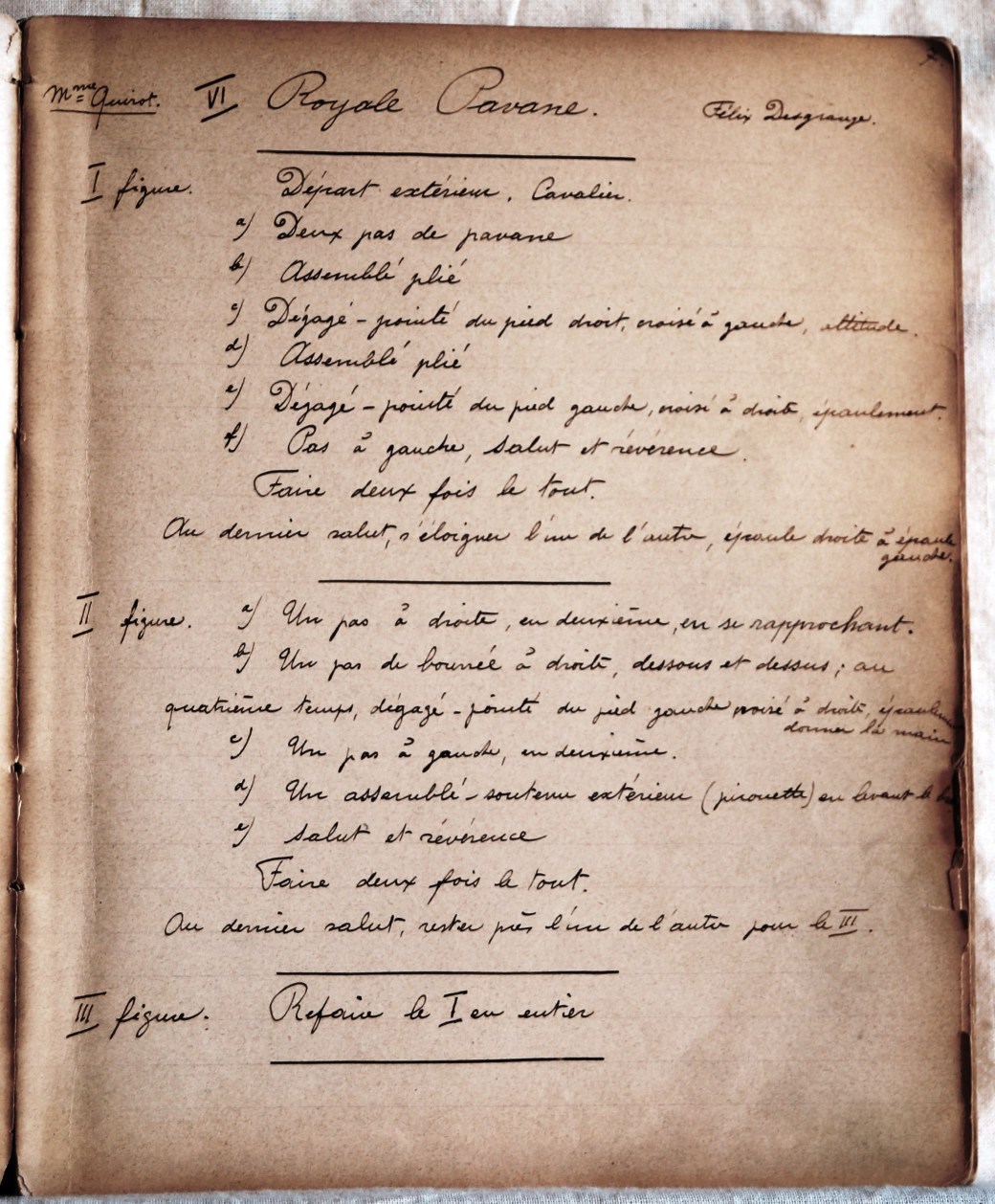
Félix Desgranges (1848-1920) studied under Delibes and became Chef d’orchestre de la Présidence. He was also a composer of dance music for piano, including a set of three Danses Anciennes pour Piano: Royal Menuet, Royale Gavotte and Royale Pavane, published by Henri Gregh in Paris in 1906. The Pavane is a sixteenth-century, Renaissance dance, but was a popular form in the wave of concert, theatrical and salon music inspired by ancient dances at the end of the nineteenth century; Fauré (1887), Ravel (1889), Enescu (1903) and Vaughan-Williams (1930) wrote Pavanes, as did many more minor composers around the turn of the century. Typically, these ‘lesser’ Pavanes were intended to be danced, were scored for piano only, and were sometimes published together with choreographies. Contemporary writers saw the Pavane as a solemn and stately dance with a persistent rhythm.
Revuz clearly adopted the pieces from Desgranges’ set within a year of their publication, so these can be considered modern dances (or revivals with modern music) in comparison to the Quadrille and Lanciers. The heading of this entry mentions Desgranges to the right of the title and a Mme. Quirot to the left; she may have been the choreographer of the version Revuz gives.
Nowadays most people with a musical training will know these dances at least as abstract forms but it’s much less likely that they will know the dance figures and steps. However, at the end of the nineteenth century, these dances would have been familiar also through staged performances such as Massenet’s Manon (first performed in Paris in 1884 and performed just a year later in Geneva) which includes a danced Gavotte “Obéissons quand leur voix appelle” (Act III scene 1). In the Gavotte, the belle époque looked back to the ancien régime.
 The Eugene Revuz Dance notebook